Journal
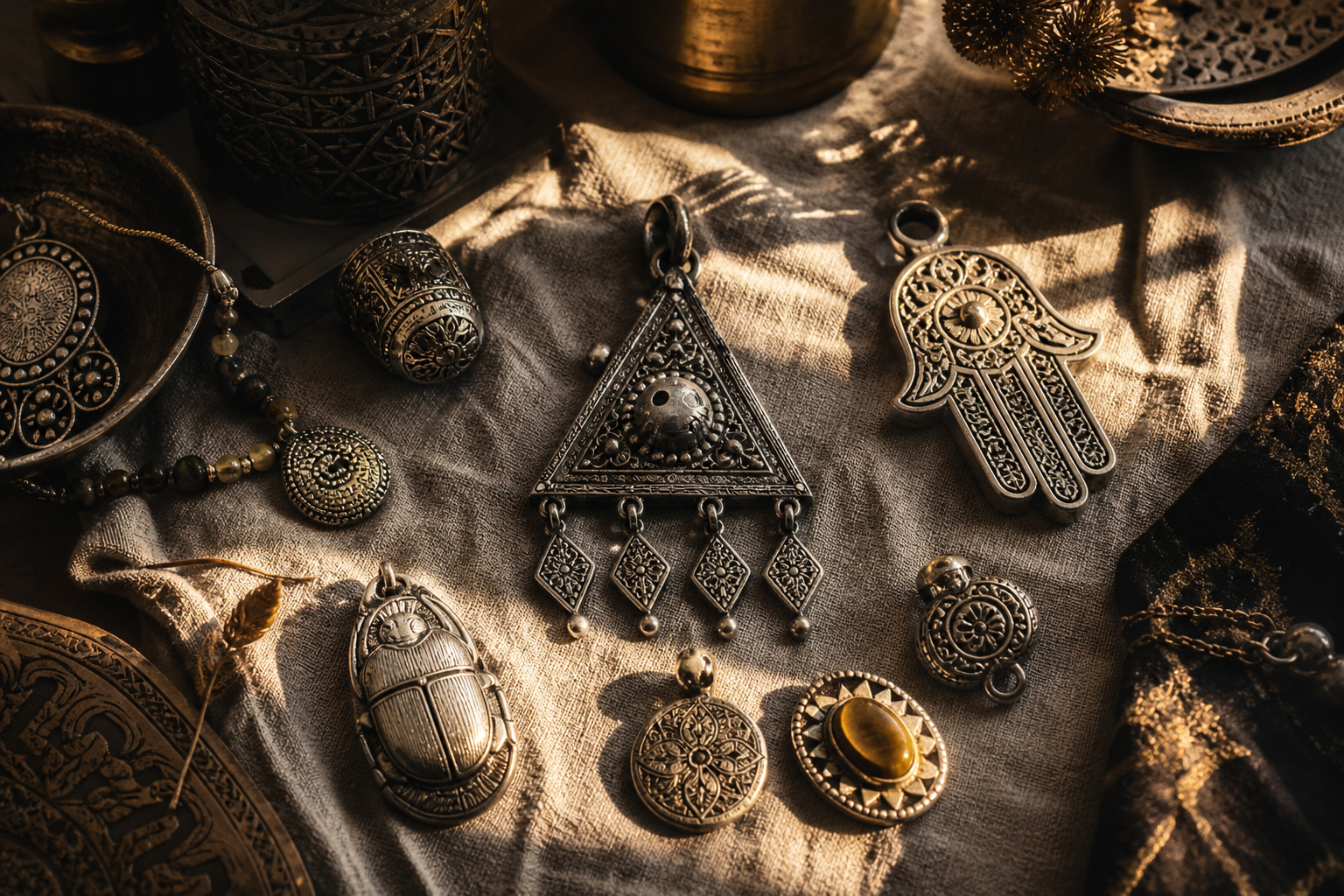
Moonlit Trinkets: Silver Amulets Across Cultures
Oct 28, 2026 09:26 PM
From the golden sands of ancient Egypt to the rugged steppes of Central Asia and the vibrant souks of North Africa, silver amulets have long served as shimmering vessels of meaning and protection. In Egypt, silver’s pale glow linked it to the moon, ritual purity, and even the bones of the gods—making silver amulets, like electrum-wire sa-amulets or scarabs, potent symbols of regeneration, divine favor, and the promise of resurrection . Meanwhile, in Central Asia, nomadic Turkmen women adorned themselves with elaborate silver chest pendants—tumar or papoose-shaped amulets—that held scrolls of blessings or Qur’anic verses, the dangling charms believed to ward off evil and signal both spiritual protection and social identity . Venturing further west, the protective power of silver amulets continues to shine in North Africa and the Middle East. The iconic hand-shaped hamsa—or “Hand of Fatima”—crafted in silver, is revered by both Jewish and Muslim communities as a guardian against envy and the evil eye . In Yemen, cylindrical silver amulet cases known as hirz or kitabs held inscribed prayers and verses, acting as both guardians of sacred text and intimate talismans against misfortune . Each piece is a beautiful testament to how cultures have turned silver into more than adornment—into meaningful symbols of faith, identity, and hope. Isn’t it wonderful how a simple metal, shaped by hand and heart, can hold centuries of cultural stories in its gleam?
← Back to Blog